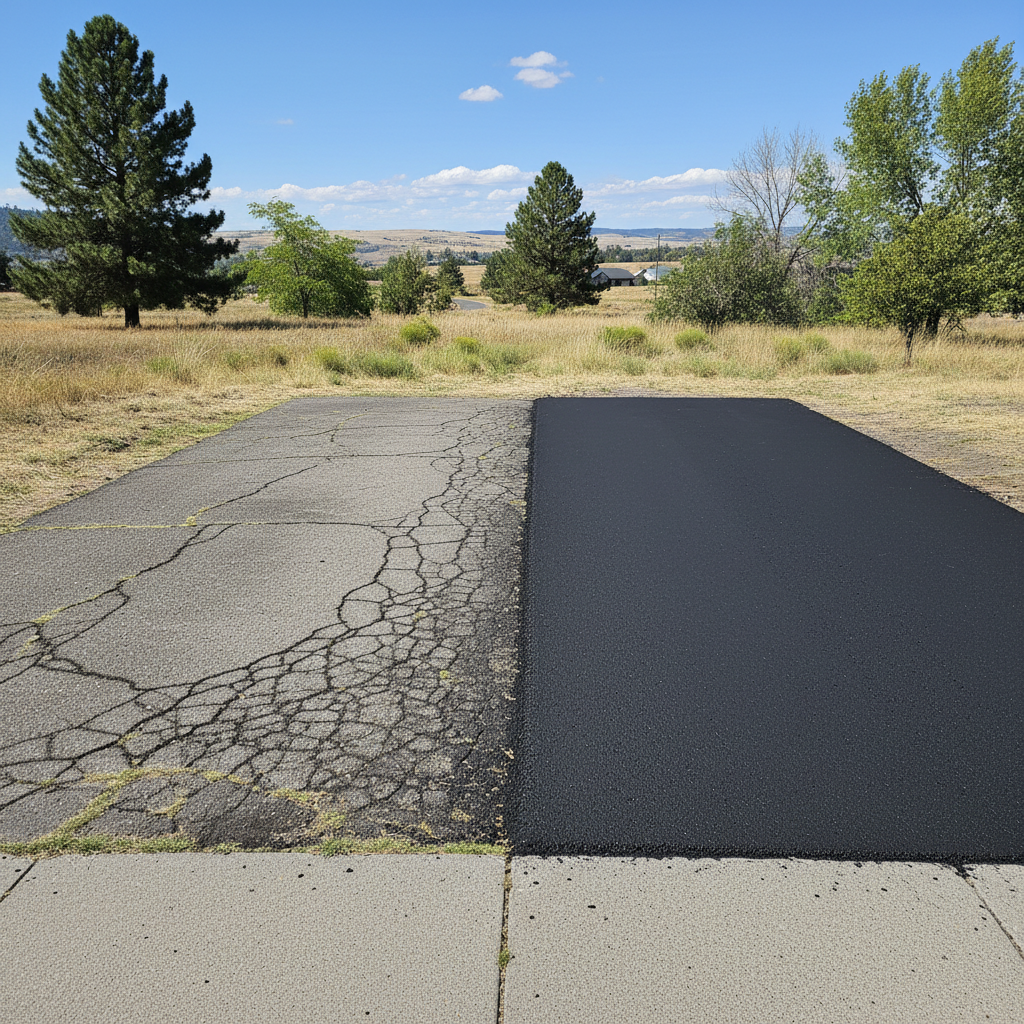
Alright, let's talk about those cracks and potholes showing up in your asphalt driveway. Nobody wants them, but they happen, especially with our hot Pasco summers and cold, wet winters. When it comes to fixing them, you've generally got two main ways to go: infrared patching or the more traditional saw-cut, remove, and replace method. I've seen both done a lot around here, from the newer developments out by Road 68 to the older homes closer to downtown, and each has its place. But for homeowners, one usually makes a lot more sense.
Infrared Asphalt Patching: The Quick Fix
First up, infrared. This method uses a special machine that heats up the existing asphalt around the damaged area. Think of it like a giant microwave for your driveway. Once it's hot and soft, the crew rakes out the loose stuff, adds a bit of new asphalt mix and rejuvenating oil, and then compacts it all back down. The idea is to blend the new material seamlessly with the old, creating a 'welded' patch.
Pros of Infrared:
- Speed: It's fast. A good crew can get in and out pretty quick, meaning less disruption for you.
- Seamless Appearance: Because it blends the old and new, the patch can look pretty smooth if done right. No hard lines around the repair.
- Less Waste: You're not tearing out and hauling away a bunch of old asphalt, which can be good for the environment and sometimes your wallet on disposal fees.
Cons of Infrared:
- Durability: This is where it often falls short, especially in our climate. The underlying problem, like a weak base or poor drainage, usually isn't addressed. You're essentially patching over an issue. I've seen these patches fail within a year or two, especially with the ground freezing and thawing we get.
- Limited Application: It works best for minor surface cracks or shallow depressions. If you've got a deep pothole or a major structural issue, infrared isn't going to cut it.
- Cost: While it might seem cheaper upfront, if you're patching the same spot repeatedly, those costs add up fast.
Saw-Cut & Replace: The Robust Repair
Now, let's talk about the saw-cut method. This is what Omega Paving Solutions typically recommends for most permanent repairs. With this approach, we use a saw to cut out a clean, rectangular section around the damaged asphalt. We dig out all the bad material, down to the base. Then, we inspect and often repair or reinforce the base layer. After that, we fill the hole with fresh, hot asphalt mix and compact it thoroughly.
Pros of Saw-Cut & Replace:
- Durability: This is the big one. By removing all the compromised material and addressing the base, you're getting a much stronger, longer-lasting repair. You're fixing the root cause, not just the symptom. This is crucial for areas with expansive clay soils, which we definitely have pockets of around Pasco, causing a lot of movement and stress on paved surfaces.
- Structural Integrity: You're rebuilding the pavement section, ensuring it can handle traffic and weather for years to come.
- Cost-Effectiveness Long-Term: While the initial cost might be a bit higher than infrared, you're doing the job once, and doing it right. You won't be calling us back next season for the same spot.
- Versatility: This method can handle anything from small potholes to large, deep areas of failure.
Cons of Saw-Cut & Replace:
- Appearance: You'll have visible seams where the new asphalt meets the old. It's a clean line, but it's there. It's not as 'seamless' as a perfectly done infrared patch.
- More Invasive: It takes a bit longer, involves more equipment, and creates more debris.
My Recommendation for Pasco Homeowners
Look, if you're just trying to get through the winter with a tiny, shallow crack and you're planning a full driveway replacement next spring, maybe infrared could be a temporary band-aid. But for any repair you want to last, especially with the temperature swings and the occasional heavy rain we get here in the Tri-Cities, I'm always going to steer you towards the saw-cut and replace method.
It's the more robust, permanent solution. You're not just putting a patch over a problem; you're actually fixing it. You'll save money and headaches in the long run, and your driveway will be safer and look better for much longer. Don't cheap out on a repair that'll just fail again. Get it done right the first time.